The Golden Child
From Epic Tragedy to Modern Guardian
Introduction: The Shadow of the Warrior
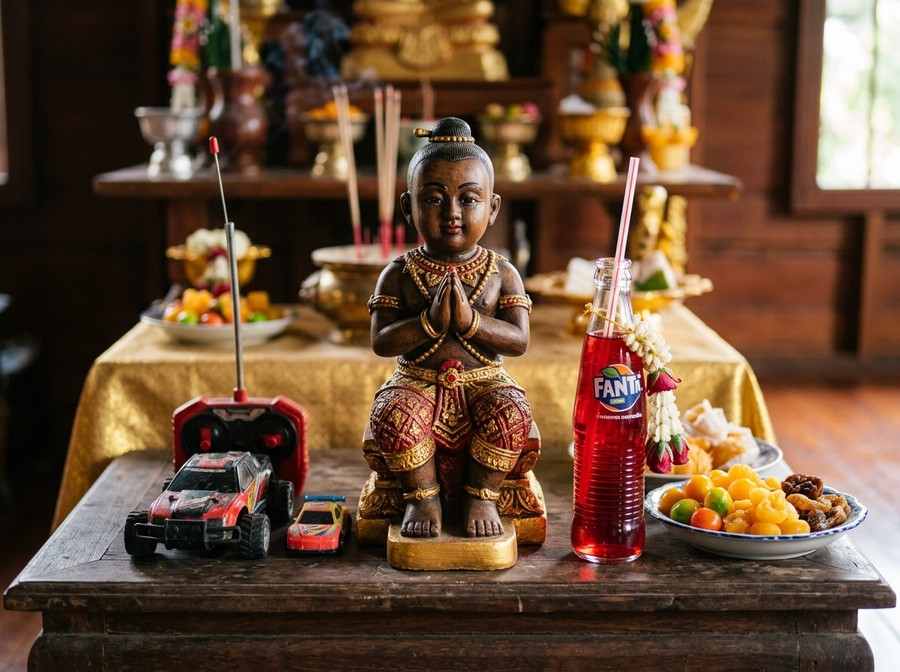
In the vast and intricate pantheon of Thai Occultism—known collectively as Wicha—no single entity commands as much fearful respect, widespread devotion, and cultural fascination as the Kuman Thong (กุมารทอง), the "Golden Child." To the uninitiated modern observer, the Kuman Thong appears as a benevolent, slightly mischievous spirit of fortune, often depicted as a cherubic boy in traditional Thai clothing, surrounded by offerings of red soda, sweet meats, and colorful toys. He is the guardian of the shophouse, the bringer of unexpected wealth, and the silent protector of the household.
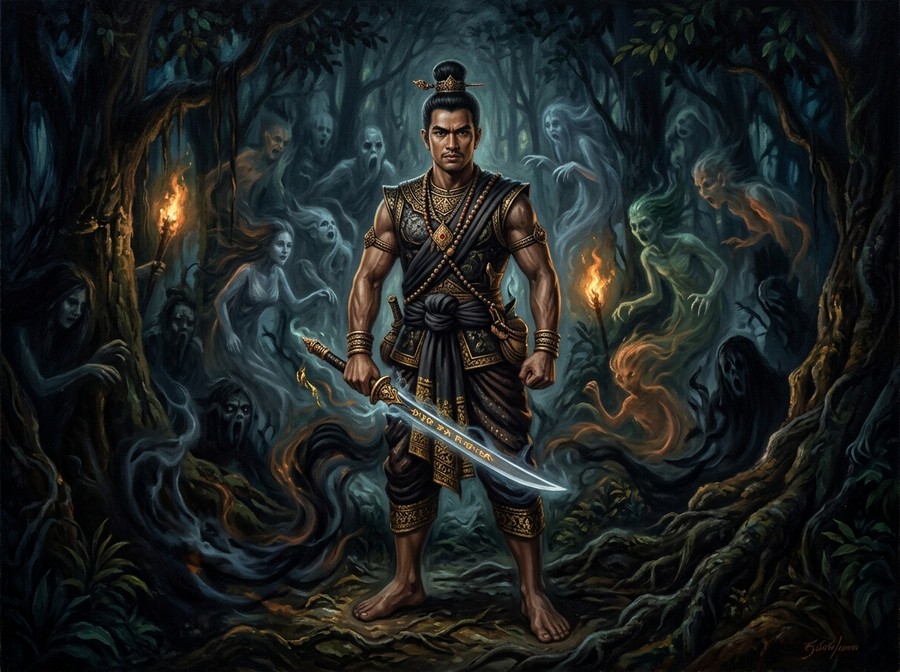
However, to truly understand the Kuman Thong, one must strip away the modern veneer of commercialized luck and traverse the darkest corridors of ancient Siamese animism. The true origin of the Golden Child is deeply rooted in the blood-soaked pages of the Sepha Khun Chang Khun Phaen, a monumental epic of Thai literature that serves as both a historical record of Ayutthaya-era society and a definitive grimoire of ancient magical practices.
The Genesis: Betrayal and the Poisoned Chalice
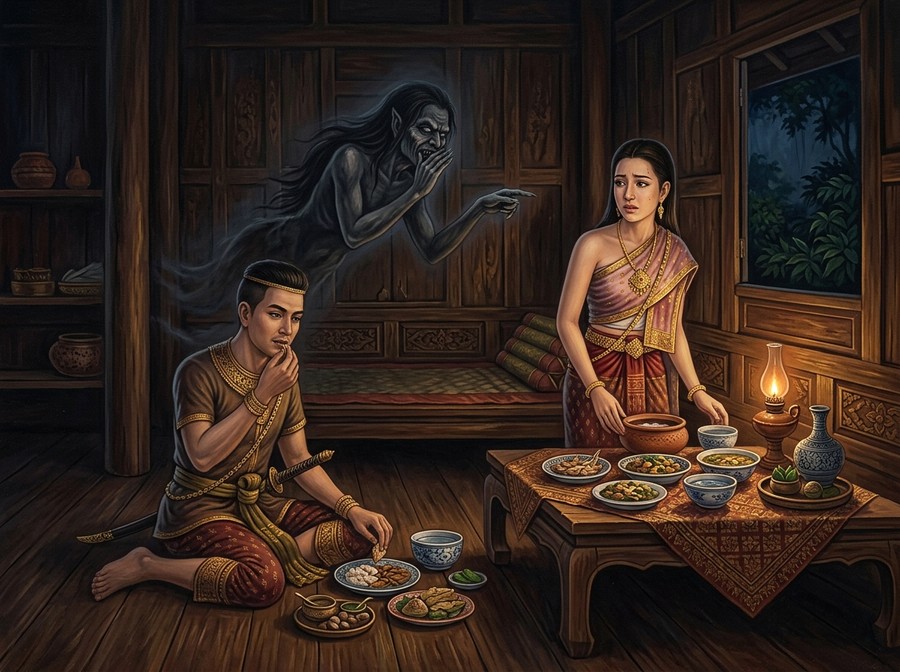
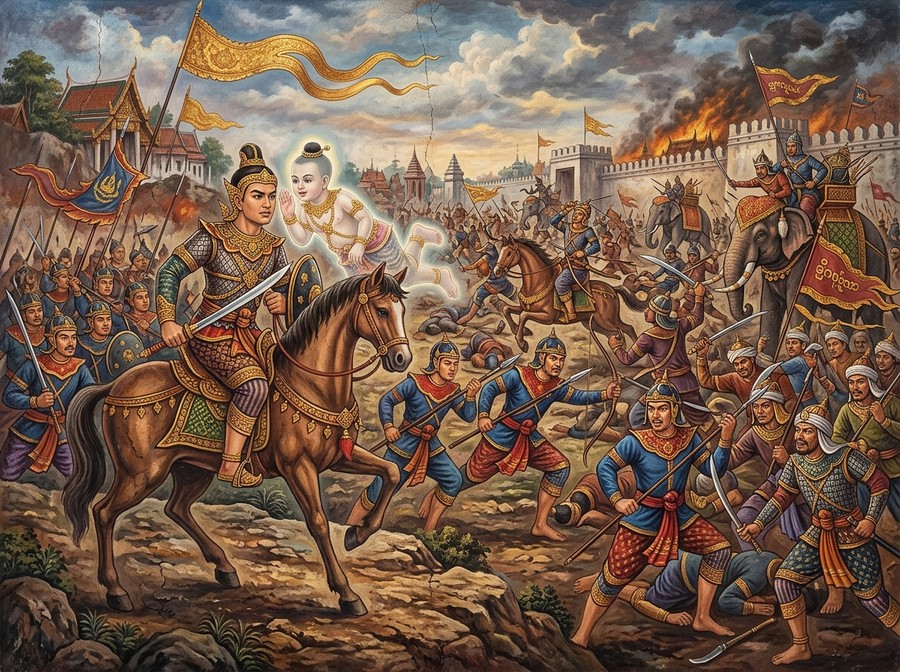
The terrifying genesis of the Golden Child begins deep within the unforgiving jungles of ancient Siam, during Khun Phaen's period of exile and outlawry. The legendary warrior took Nang Bua Klee, the daughter of a powerful bandit chief named Muen Harn, as his wife. Muen Harn, threatened by Khun Phaen's growing influence and unparalleled mastery of Saiyasart (Occultism), ordered his daughter to assassinate him using a lethal, untraceable poison.
Torn between filial piety and marital love, the pregnant Bua Klee ultimately chose her father. However, Khun Phaen was protected by a Hong Prai—a whispering spirit familiar. Warned of the poisoned meal, Khun Phaen faced a devastating reality: in a world of treachery, he needed an absolute, incorruptible guardian. Ancient grimoires dictated that the ultimate protector, a Prai Kumarn, could only be forged from the soul of one's own unborn child (Tai Tang Klom).
The Midnight Ritual at Wat Tai
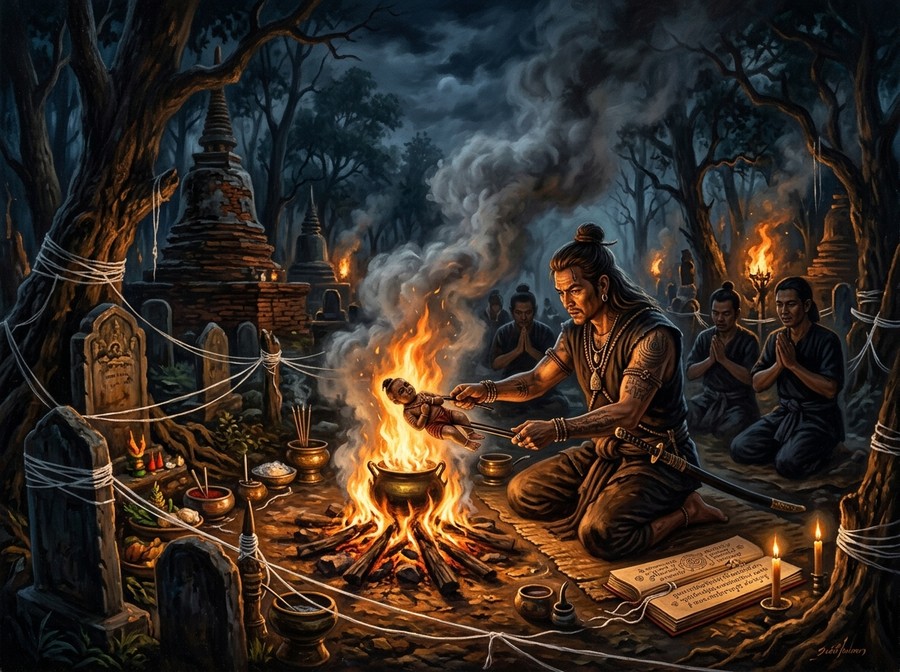
Driven by martial pragmatism and betrayal, Khun Phaen executed his treacherous wife while she slept, surgically extracting the unborn male fetus. Fleeing to the desolate, abandoned graveyard of Wat Tai, he enacted the primal Wicha Kuman Thong.
He constructed a makeshift ceremonial altar (Saan Piang Taa) and built a fire using highly specific, spiritually charged woods—Mai Rak (Love wood) and Mai Chaiyaphruek (Wood of Victory). Wrapping the fetus in sacred white thread (Sai Sin), he suspended it over the roaring flames. As the flesh desiccated into a golden, mummified state, Khun Phaen chanted relentless Khom Sanskrit incantations. He invoked the Four Elements (Na Ma Pa Ta) to reconstitute the astral body and recited the Akarn 32 to build a spiritual anatomy. By dawn, the child's spirit awoke, bound eternally to his father.
The Tactical Advantage in Ancient Siam
The original Kuman Thong was not a talisman for commerce; it was a weapon of war. Operating in the unseen realms, it acted as a Prai Grasip (Whispering Spirit). It scouted enemy camps, whispered troop movements into Khun Phaen's ear, manipulated the minds of adversaries, and created massive auditory illusions to shatter enemy cavalry formations. It was an ethereal shield against incoming magical attacks, solidifying Khun Phaen's status as the invincible Jom Khamang Waet.
The Syncretic Evolution: From Necromancy to Compassion
As Thai society modernized, the barbaric practices of utilizing human remains were strictly outlawed. However, the psychological need for protective, fortune-bringing spirits remained. The Wicha Kuman Thong underwent a profound syncretic evolution, guided by the greatest Master Monks (Gaeji Ajarn) of the 20th century.
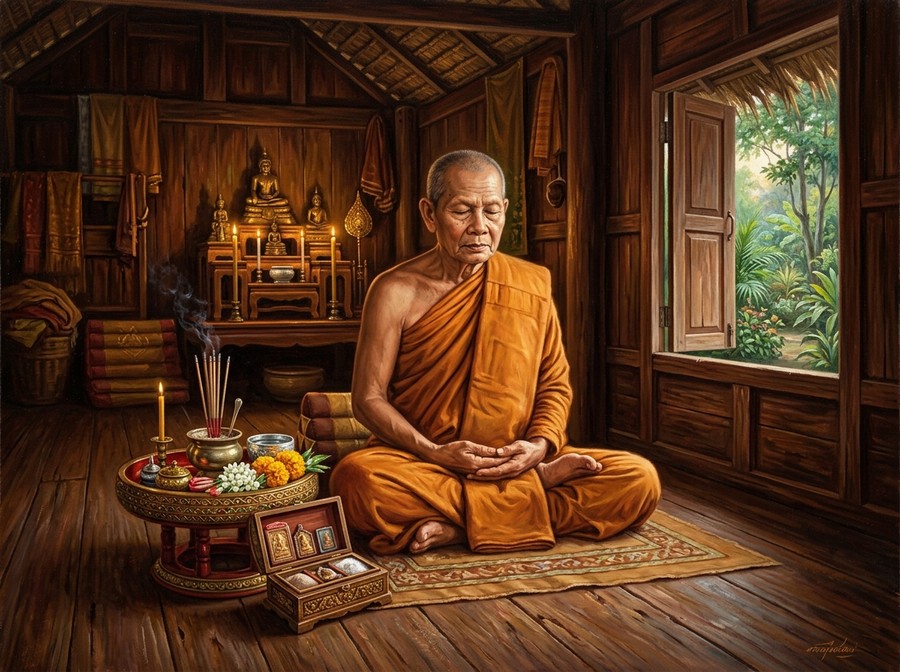
Masters like Luang Por Tae Kong Thong of Wat Sam Ngam pioneered the creation of clay Kuman Thong effigies. Human flesh was replaced with highly charged Muan Sarn (sacred materials), primarily "Din Jed Pa-Cha" (soil from 7 cemeteries) and "Din Jed Pong" (soil from 7 salt licks). Through intense Samadhi (meditation), monks invited wandering or benevolent child spirits to inhabit these vessels, transforming dark sorcery into compassionate merit-making.
The Pong Prai Kumarn of Luang Pu Tim
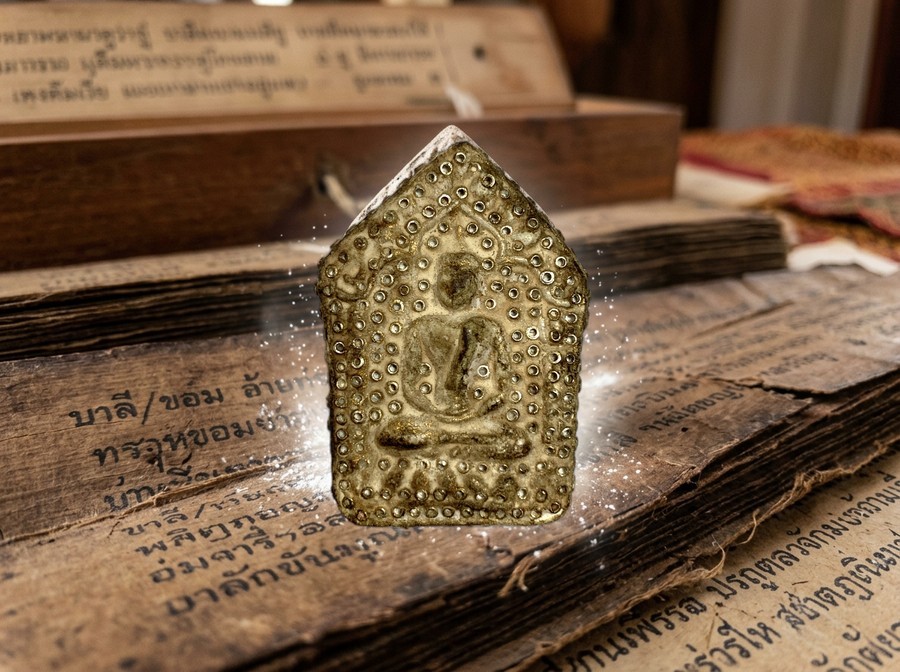
Perhaps the most famous evolution is the Pong Prai Kumarn mastered by Luang Pu Tim Isarigo of Wat Laharn Rai. His disciples obtained the skull of a woman who died in childbirth (Mae Som) on a specific astrological day. The bone was ground into powder in a stone mortar. Rather than binding a spirit through dark necromancy, Luang Pu Tim spent consecutive nights using profound Buddhist meditation to purify the lingering spirit, elevating it to a "Half-Deity, Half-Prai" status.
This purified, immensely powerful powder was then mixed into his famous Phra Khun Phaen amulets, bridging the ancient epic with the pinnacle of modern amulet collecting.
Modern Worship and Taboos
Today, the Kuman Thong serves as a guardian of the household and a magnet for commerce (Maha Saneh). Devotees must follow strict protocols:
- Invitation: Lighting 16 incense sticks outdoors to inform local spirits before bringing the Kuman Thong home.
- Offerings: Red soda (Nam Daeng), Thai sweets, and toys. Raw meat or blood is strictly forbidden, reflecting the shift away from dark animism.
- Placement: Must be placed lower than Buddha images and monks, symbolizing its status in the spiritual hierarchy.
The Kuman Thong remains a fascinating testament to Thailand's ability to weave ancient, dark folklore into modern spiritual practice, honoring the legacy of a legendary warrior while providing comfort and fortune to millions.